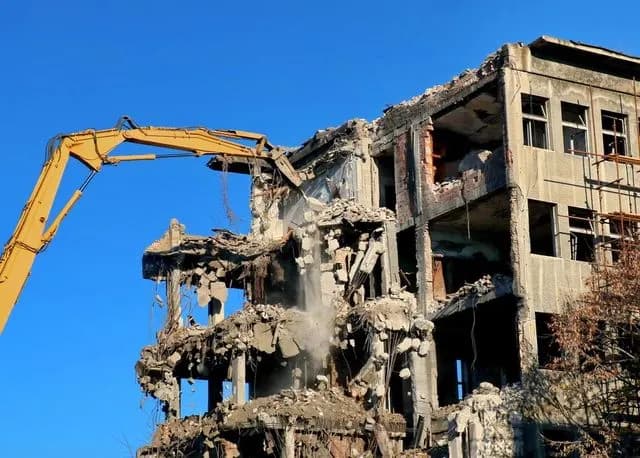
A home is more than a structure. For most Nigerians it is a life's savings, a family's security, and often the only inheritance they will leave. When the state carries out the demolition of buildings, flattening a home with little notice and no compensation, the loss is financial, and it is also deeply human. It is a debt the state incurs the moment it takes a citizen's property, and in too many cases it never pays.
The human cost is documented. In Oworonshoki, Lagos, close to 10,000 people were forcibly evicted from a riverside community in about a month. Community leaders reported more than 10 deaths, including at least one from a suspected heart attack. The government says claims are being processed, but residents have been paid only about $150. In the 2023 Abule Ado demolitions, a resident whose house was reportedly worth N300 million said it was pulled down without notice, and that about four people had died of heart attacks while neighbours were hospitalised with strokes.
The most recent case comes from Onitsha Main Market in Anambra State, where a man reportedly collapsed and died on Wednesday, 30 September 2026, after his three shops and plaza were demolished. The market has been the scene of repeated demolition exercises this year, with more than 1,000 shops reportedly cleared in August. The government says the exercise removes obstructions and eases drainage problems, while traders displaced in an earlier round insisted they held receipts and allocation papers for shops they bought through the local council.
These accounts come from victims and community leaders, and medical causation has not been established in each case. Still, a pattern is plain to anyone willing to look: people who spent decades building a life are given days, sometimes hours, to lose it.
This is not a new problem. In Otodo-Gbame and Ilubirin, Amnesty International documented repeated evictions that left over 30,000 people homeless and 11 dead, carried out without consultation, adequate notice, compensation or alternative housing. Earlier, in Badia East, the demolition of more than 200 structures in 2013 evicted 9,000 people, who still have not received adequate compensation or an effective remedy. In February 2026, UN human rights experts condemned the mass demolitions in Lagos.
The justification is often that the buildings are "contraventions," meaning structures without proper title or approval. But illegality, even where proven, does not license cruelty.
What the law actually says
The Constitution. Section 43 guarantees every citizen the right to own immovable property. Section 44(1) forbids compulsory acquisition of property except in accordance with a law, for a lawful purpose, and with prompt payment of compensation. That is the debt in plain terms: the Constitution requires it to be paid promptly. Section 34 protects human dignity. Section 36 guarantees a fair hearing before one's civil rights are determined. The demolition of buildings without notice offends all of these.
The Land Use Act. Section 28 allows a Governor to revoke a right of occupancy for overriding public interest, and section 29 provides for compensation. But section 29 limits compensation to unexhausted improvements such as crops and structures, excluding the value of the land itself. Scholars argue this is inconsistent with sections 43 and 44 of the Constitution, which protect all immovable property. Since the Land Use Act is an ordinary statute, the Constitution should prevail wherever the two conflict.
The courts have already spoken. In January 2017, a Lagos High Court held that demolishing waterfront communities without adequate notice or alternative shelter amounts to cruel, inhuman and degrading treatment contrary to section 34 of the Constitution. Yet Amnesty reported that the Lagos government disregarded that ruling again in 2021, and residents in Oworonshoki say an injunction against evictions was ignored. A government that defies the courts is not enforcing the law. It is breaking it.
International law. Nigeria is bound by the African Charter on Human and Peoples' Rights, which is part of domestic law through its enactment statute. The African Commission found in SERAC v. Nigeria (2001) that forced evictions violate the Charter's protections of property, family and housing. Nigeria is also a party to the ICESCR, whose Committee, in General Comment No. 7, requires genuine consultation, adequate notice and remedies before any eviction.
Governments have real duties. Lagos has suffered deadly building collapses and setbacks along drainage channels, pipelines and power lines that exist for safety. Planning laws cannot be optional. I accept all these.
However, enforcing planning law and violating rights are different things. Governments can mark buildings, give notice, hold hearings, allow appeals and sequence enforcement humanely. Where title is genuinely valid, they must pay compensation. Where it is not, they can still resettle people with dignity. Nothing in the safety argument justifies two hours' notice, or ignoring a court order.
What must change
1. Mandatory notice and hearing before any demolition of buildings, with a real chance to challenge it in court.
2. A rule that court orders are obeyed. Officials who defy injunctions should face contempt proceedings personally.
3. Amend section 29 of the Land Use Act to align compensation with section 44, covering the full value of what is taken.
4. Resettlement and relief for those displaced, including those without formal title.
5. Independent inquiries into deaths and injuries linked to demolitions, and compensation for affected families.
A state's legitimacy rests on whether it keeps its own laws, especially against the people with the least power to resist. A family sitting among the rubble of their home is not an abstraction. The bulldozer should come only after the law has been honoured, and the debt owed to those it displaces should be paid in full.