By Gilbert Obichere
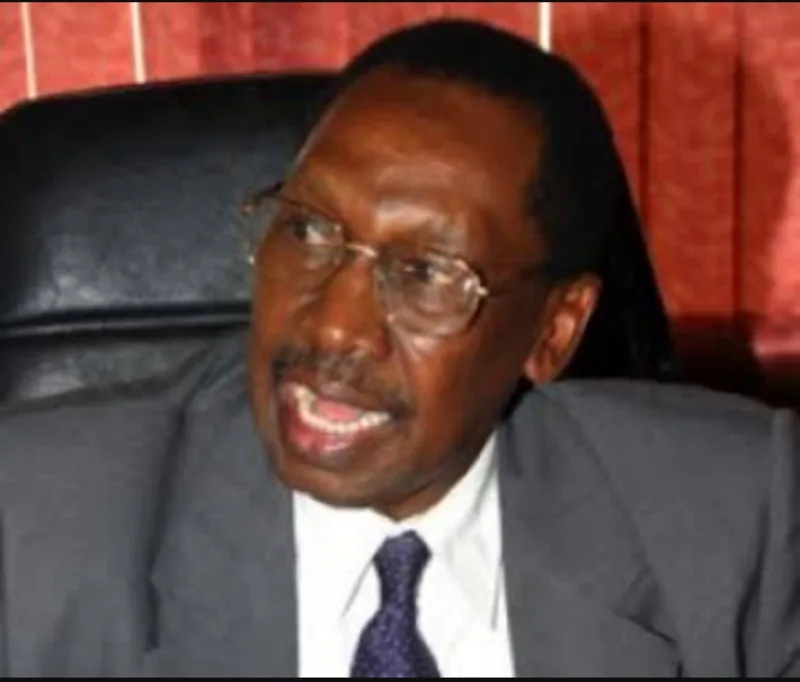
Justice Mohammed Lawal Uwais, former Chief Justice of Nigeria (CJN), has passed away at the age of 89. His death occurred in the early hours of Friday, June 6, 2025, according to a statement by Dr. Kayode Ajulo, the Attorney General and Commissioner for Justice in Ondo State. The nation mourns the loss of a distinguished jurist whose influence extended well beyond the courtroom and into the heart of Nigeria’s democratic and judicial evolution.
Born on June 12, 1936, in Zaria, Kaduna State, Justice Uwais began his academic journey at the Native Authority Elementary School in Kaduna. He later attended the prestigious Barewa College, where he completed his secondary education in 1957. Driven by a passion for justice and the rule of law, he pursued legal studies in the United Kingdom and was called to the Bar at the Middle Temple, London, in 1963. He returned to Nigeria and was called to the Nigerian Bar the following year, in 1964.
Justice Uwais began his judicial career in 1973 when he was appointed as an Acting Judge of the High Court of the then North-Eastern State. A year later, in 1974, he was confirmed as a substantive judge. In 1976, he briefly served as the Acting Chief Judge of the Kaduna State High Court. His ascent in the judiciary continued as he was appointed to the Federal Court of Appeal on January 1, 1977.
In 1979, Justice Uwais was elevated to the Supreme Court of Nigeria, where he served with distinction for 27 years. His tenure culminated in his appointment as Chief Justice of Nigeria in 1995, a position he held until his retirement in 2006. During his time as CJN, he was widely regarded as a reform-minded and principled jurist. He championed numerous reforms aimed at enhancing the independence, integrity, and efficiency of the Nigerian judiciary. Among his notable contributions was his pivotal role in the establishment of the National Judicial Council (NJC), an institution tasked with overseeing the appointment, discipline, and welfare of judicial officers in Nigeria.
Even in retirement, Justice Uwais remained committed to national development and the strengthening of democratic institutions. He was appointed by the late President Umaru Musa Yar’Adua to chair the Presidential Electoral Reform Committee—a role in which he once again demonstrated his deep patriotism and commitment to good governance. The committee, which included eminent Nigerians such as Bishop Matthew Hassan Kukah and renowned human rights lawyer Dr. Olisa Agbakoba, SAN, produced a landmark report that continues to inform electoral reforms in Nigeria.
Justice Uwais was widely respected for his intellect, fairness, and unwavering commitment to justice. He was a man of deep conviction, whose contributions to the legal profession and public service left an indelible mark on the nation. His legacy lives on through the many legal minds he mentored and the institutional reforms he championed.
He is survived by his wife, children, and grandchildren.
Justice Mohammed Uwais will be remembered not only as a towering figure in Nigeria’s judiciary but also as a patriot whose service to the nation extended far beyond the bench. May his soul rest in perfect peace.