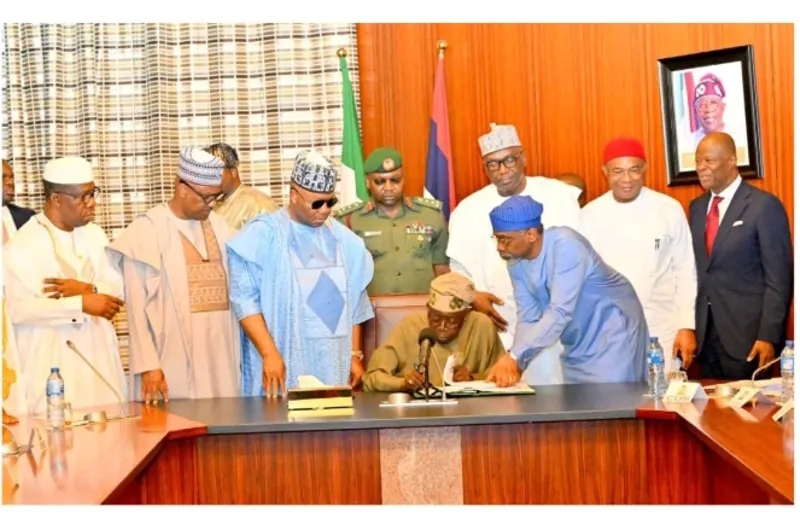
Why Justice Ariwoola’s Acting Tenure Will be Quite Short.

The air is rife with news of Tanko Mohamed, Nigeria’s Chief Justice, tendering his resignation on Monday, June 27, under circumstances that are considered controversial. In a swift intervention to this, the president has appointed Justice Kayode Ariwoola who is the most senior justice in the Supreme Court as the acting chief justice. However this appointment is expected to last for a short period of time and here’s why:
The Supreme Court is composed of the Chief Justice of Nigeria and such number of justices not more than 21, appointed by the President on the recommendation of the National Judicial Council, (NJC) and subject to confirmation by the senate.
Where the office of the Chief Justice becomes vacant or for any reason he is unable to perform the functions of the office, the constitution provides for the next things to happen in section 231 (4) and (5)
thus:
“(4) If the office of Chief Justice of Nigeria is vacant or if the person holding the office is for any reason unable to perform the functions of the office, then until a person has been appointed to and has assumed the functions of that office, or until the person holding has resumed those functions, the President shall appoint the most senior Justice of the Supreme Court to perform those functions.
(5) Except on the recommendation of the National Judicial Council, an appointment pursuant to the provisions of subsection (4) of this section shall cease to have effect after the expiration of three months from the date of such appointment, and the President shall not re-appointment a person whose appointment has lapsed.”
The import of the above provision is that once the office becomes vacant by any of such reasons mentioned above, the president shall appoint the most senior justice of the court to assume office as acting CJN. This appointment will only be valid for three months after which another justice is appointed to act in the same capacity, except the person so appointed is recommended by the National Judicial Council and subsequently confirmed by the Senate, in which case, the person becomes the substantive CJN.
NJC is a creation of section 153 of the 1999 Constitution (as amended) with powers to hire and fire erring judicial officers in the country.
Barring any last minute change, sources have confirmed that the National Judicial Council (NJC) is set to recommend Justice Kayode Ariwoola to President Muhammadu Buhari as the Chief Justice of Nigeria (CJN).