Russian Warships Officially Enter The Red Sea, Possible Confrontation With NATO?
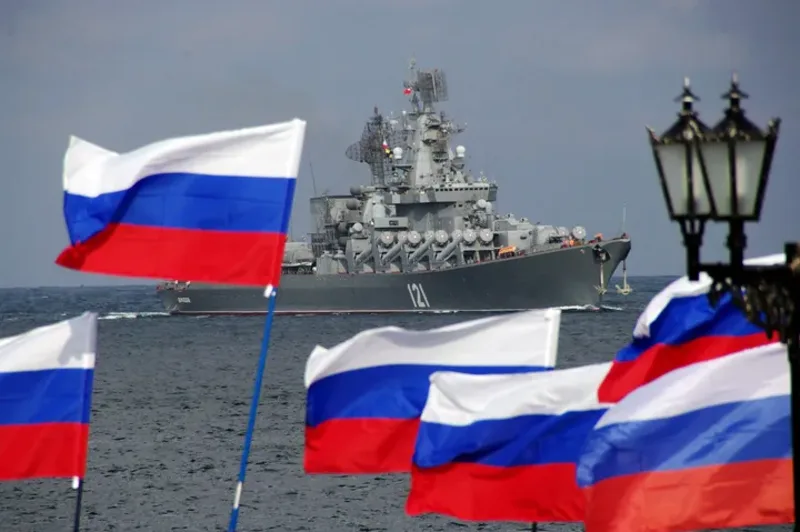
The entry of Russian warships into the Red Sea potentially leading to confrontation with NATO is a complex geopolitical scenario that requires careful analysis. To understand the implications of such an event, it’s essential to examine the historical context, the interests and motivations of the involved parties, and the broader geopolitical dynamics at play.
Firstly, the Red Sea is a crucial maritime route linking the Mediterranean Sea to the Indian Ocean, serving as a vital artery for international trade. Its strategic significance cannot be overstated, as it facilitates the transportation of goods, particularly oil, between Europe, Asia, and Africa. Additionally, the Red Sea is bordered by several countries with varying political affiliations and interests, including Egypt, Saudi Arabia, Sudan, and Eritrea, among others.
The presence of Russian warships in the Red Sea would undoubtedly raise concerns among NATO member states, primarily due to the ongoing tensions between Russia and the Western alliance. Since the annexation of Crimea in 2014 and the subsequent conflict in Eastern Ukraine, relations between Russia and NATO have deteriorated significantly. NATO has bolstered its military presence in Eastern Europe in response to perceived Russian aggression, conducting large-scale military exercises and deploying troops to the region.
The deployment of Russian warships to the Red Sea could be interpreted by NATO as a projection of Russian power into a strategically vital region, potentially posing a challenge to NATO’s naval dominance in the area. Moreover, given the history of maritime confrontations between NATO and Russian forces, such as encounters in the Baltic and Black Seas, there is a legitimate concern that the presence of Russian warships in the Red Sea could escalate tensions and increase the risk of military incidents.
From Russia’s perspective, the decision to deploy warships to the Red Sea may be driven by a combination of strategic and geopolitical considerations. Firstly, Russia has sought to expand its influence beyond its traditional sphere of influence in Eastern Europe, particularly in the Middle East and North Africa. The deployment of warships to the Red Sea could be seen as part of Russia’s broader efforts to assert itself as a major player in the region and challenge Western dominance.
Additionally, the Red Sea provides Russia with access to key geopolitical hotspots, including the Suez Canal and the Bab el-Mandeb Strait. Control over these maritime chokepoints could potentially enable Russia to exert pressure on international shipping lanes and disrupt the flow of goods, thereby enhancing its leverage in regional and global affairs.
Furthermore, Russia’s military presence in the Red Sea could be aimed at countering perceived threats to its national security, such as the spread of terrorism and extremism emanating from conflict zones in the Middle East and North Africa. By deploying warships to the region, Russia may seek to demonstrate its commitment to combating terrorism and maintaining stability, thereby positioning itself as a responsible actor on the world stage.
In the event of a confrontation between Russian warships and NATO forces in the Red Sea, the potential consequences would be profound and far-reaching. Firstly, there is a risk of escalation, as both sides may feel compelled to demonstrate their resolve and protect their interests. This could lead to a dangerous spiral of military action and counteraction, with the potential for unintended consequences and miscalculation.
Moreover, a confrontation in the Red Sea could further exacerbate tensions between Russia and NATO, potentially undermining efforts to de-escalate existing conflicts and resolve geopolitical disputes through diplomatic means. It could also strain relations between NATO member states and regional actors, such as Egypt and Saudi Arabia, who may be caught in the middle of the standoff.
In conclusion, the entry of Russian warships into the Red Sea has the potential to escalate tensions and provoke a confrontation with NATO. Given the strategic importance of the region and the complex geopolitical dynamics at play, it is essential for all parties to exercise restraint and prioritize dialogue and diplomacy in order to avoid a dangerous escalation of the situation. Only through constructive engagement and mutual respect can the risk of conflict be mitigated, and stability preserved in this critical maritime corridor.