Between June 13–14, gunmen believed to be armed herdsmen unleashed a brutal massacre on Yelwata, Guma LGA, Benue State — leaving around 200 people dead, many of them internally displaced, seeking shelter in a Catholic mission. But in Abuja, silence throbbed louder than the wailing of the bereaved.
And just when we thought the heavens had turned their face away, it was not our president, not our commander-in-speech, but Pope Leo XIV— from across the oceans —who first raised a voice of compassion. During his Sunday Angelus, the Holy Father called the massacre a “terrible tragedy” and offered prayers for “security, justice, and peace.” In that moment, the conscience of Christendom bled for Nigeria—while the man elected to lead her slept beneath golden curtains.
Presidential Silence Is Not a Security Strategy
Let it be said loud and clear: a government that cannot protect its people is not a government; it is a billboard of failure. When Rome reacts before Abuja, something is fundamentally wrong—not just with the structure, but with the soul of our leadership.
President Bola Tinubu finally broke his silence after the Pope. His statement, sandwiched between recycled phrases and old promises, rang hollow. He ordered his security chiefs to act—as though he hadn’t done so before. As though Nigerians haven’t heard that tired command a hundred times with nothing but body bags to show for it.
How many times must the blood of innocents water Nigerian soil before action replaces condolence?
Teargas for Protesters, Silence for Killers
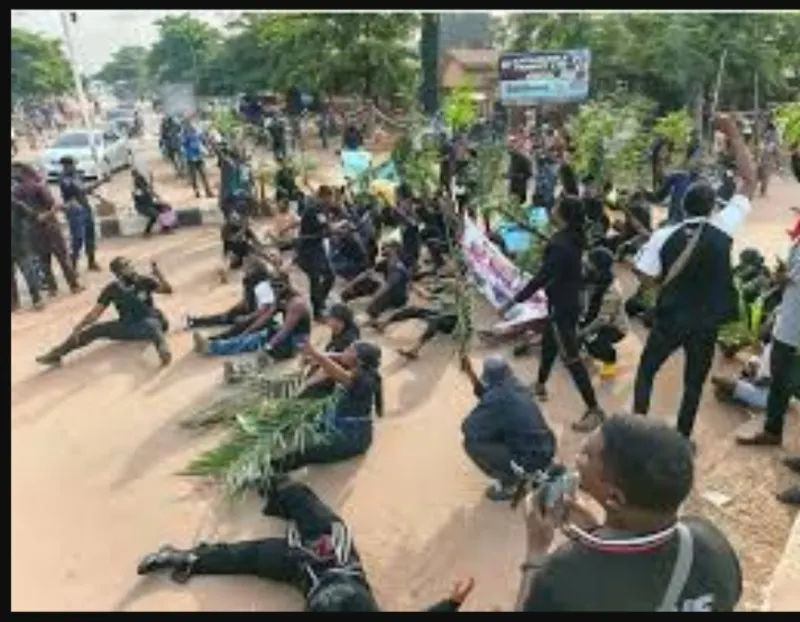
In Makurdi, youths took to the streets—grief-stricken, angry, and desperate. They chanted, “Stop Benue killings.” They carried placards, not weapons. But they were met with tear gas, not sympathy.
It’s a cruel irony that Nigerian security agents can mobilize to disperse peaceful protesters but cannot locate those who wield machetes and AK-47s in rural communities. We are a nation where grief is criminalized, and apathy is institutionalized.
Benue: The Orphan of the Republic
Benue has become the national orphan—cared for by no one, remembered only when corpses pile high enough to attract cameras. Since 2022, thousands have died in the state in similar attacks. Yet the cycle continues—massacre, media outrage, government condolence, silence, repeat.
Where are the arrests? Where are the prosecutions? Where are the commanders on ground? Where is the commander-in-chief?
If this isn’t state failure, then we must redefine the word “state.”
Our leaders are like fire alarms that ring after the house has turned to ash.
The President wears silence like a bulletproof vest—impervious to the screams of the people.
If justice were a currency, Benue would be bankrupt. And if condolence could raise the dead, Benue would be a city of resurrection.
Final Word: The Funeral March of a Nation
Nigeria, today, stands at a dangerous intersection between indifference and implosion. We do not lack capacity—we lack will. The killers in Benue and other parts of the country are not ghosts. They are not invisible. They walk the earth, emboldened by the emptiness of our response.
If Pope Leo can lift his voice before our own President, then what hope does the farmer in Agatu or the widow in Yelwata have?
We are a people bleeding without bandages, mourning without memorials. And until justice becomes more than a press statement, this republic will remain a cemetery with a national anthem.