By Long John
It has been days since Air India Flight AI171 fell from the skies over Ahmedabad, yet the shock of the disaster continues to linger—less in the headlines now, but ever-present in the hearts of those directly touched by the tragedy and in the collective conscience of a nation still asking, How did this happen?
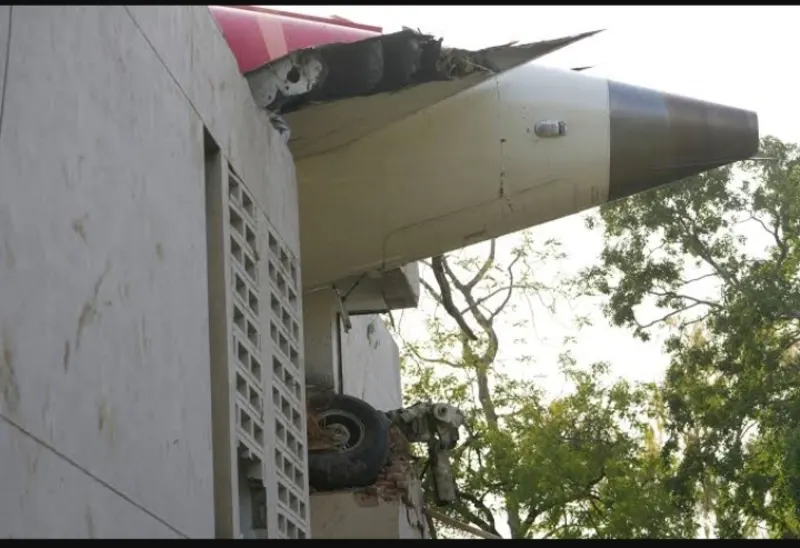
The June 12 crash claimed 274 lives—241 onboard and 33 on the ground—making it one of the deadliest air disasters in India’s modern history. The aircraft, a Boeing 787-8 Dreamliner, had barely cleared the airport perimeter before it nosedived into the B.J. Medical College hostel complex. Most onboard perished instantly. Those on the ground had no warning.
Only one man survived—Vishwash Kumar Ramesh, a British-Indian national in seat 11A. His escape is described in quiet, haunted tones: the smell of jet fuel, the shouts, the heat. But even his survival story is tinged with tragedy. His brother, seated next to him, was among the dead.
A Turning Point for Indian Aviation
While the immediate response focused on rescue and relief, the broader conversation has now shifted to what this crash reveals about India’s aviation infrastructure, regulatory oversight, and the risks of a rapidly expanding airline industry. Air India, under Tata Group’s ambitious transformation program since its 2022 privatization, had promised world-class service and safer skies. But the crash has cast a long, cold shadow on that vision.
The Directorate General of Civil Aviation (DGCA) ordered urgent inspections across the Dreamliner fleet. Boeing, meanwhile, finds itself facing a new wave of global scrutiny. This was, after all, the first fatal accident involving a Boeing 787 in over a decade of service—a blemish that not only bruises the manufacturer’s safety record but also reopens long-standing questions about quality control and engineering oversight.
The crash has become a test case—not only of aircraft reliability but of regulatory integrity. Aviation analysts and former safety officials have quietly noted that India’s air safety apparatus, while technically improving, remains under-resourced for the scale and pace of growth it is managing.
What We Know, and What We Still Don’t
Though both black boxes have been recovered, and international teams from the U.S., U.K., and India are combing through the data, key questions remain unanswered:
* Why didn’t the aircraft gain altitude?
* Why was the landing gear still down during what should have been a routine climb?
* Were there engine issues, or was the aircraft improperly configured for takeoff?
There are also operational questions—about pilot training, aircraft maintenance, and whether pressure to maintain tight schedules amid a global pilot shortage played a hidden role.
The answers may take months, if not longer. What’s clear is that even one failure—mechanical, human, or systemic—can be fatal when lives hang in the balance.
Mourning, Memory, and Accountability
Since the crash, there have been memorials in cities across India and abroad. The names and stories of victims—students, doctors, professionals, families heading abroad for vacation or reunion—have emerged, each more heartbreaking than the last.
Among the dead was Manisha Thapa, a young Nepalese flight attendant described as ambitious and deeply beloved by her colleagues. Her death, like so many others, has become a symbol of the lives and dreams suddenly cut short.
The government has promised accountability. LIC has fast-tracked insurance claims. Air India has pledged full cooperation with investigators. But promises do not restore trust overnight.
More Than a Tragedy
In the end, the crash of Flight AI171 is not just a national tragedy. It is a mirror—forcing difficult questions about infrastructure, regulation, and human vulnerability in an era of technological promise. As India rises in global aviation rankings, the standards of safety and preparedness must rise with it.
The dead deserve more than silence. They deserve answers. And for the living, the challenge now is not simply to mourn, but to learn—deeply and urgently—from what has happened.