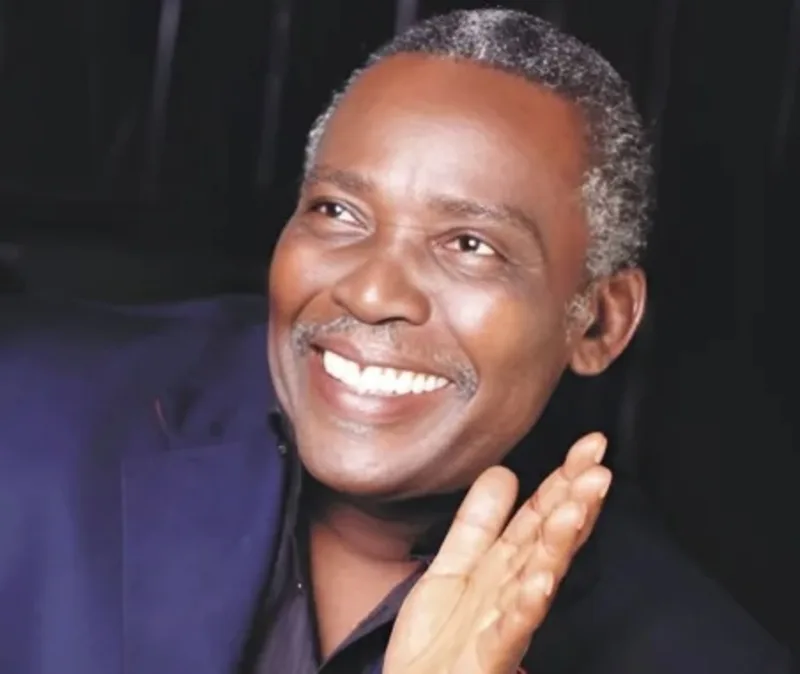
There is a particular kind of gravity that certain actors carry onto a screen — a stillness that makes every other performer in the frame seem to be working harder for less effect. For more than five decades, Olu Jacobs has been that kind of actor. Long before "Nollywood" existed as a word, he was already building the reputation that would make him one of its founding pillars: the stern father, the wise elder, the man whose silence somehow said more than anyone else's dialogue.
A Kano Childhood, a London Education
Born Oludotun Baiyewu Jacobs on 11 July 1942 to Yoruba parents from Egba Alake, Abeokuta, he spent his early childhood far from home — in Kano, in Nigeria's north. It was there, as a student at Holy Trinity School, that his path first bent toward performance: he threw himself into the debating and drama societies, discovering early that he had a gift for command of a room.
The decisive spark came from watching Chief Hubert Ogunde, the towering figure of Nigerian theatre, at one of his annual concert parties in Kano. Something about Ogunde's stagecraft convinced the young Jacobs that this was the life he wanted. In 1964, he secured a visa and travelled to Britain, where he trained at the Royal Academy of Dramatic Arts in London — one of the most storied drama schools in the world, and an unusual, ambitious route for a Nigerian actor of his generation.
Building a Career in Britain
Jacobs didn't return home immediately. Instead, he spent years working the British stage and screen, appearing in a run of well-known UK television productions — including The Professionals, Rumpole of the Bailey, and Till Death Us Do Part — and building a reputation as a serious, classically trained performer in an industry that offered few easy openings to Black British actors at the time. It was a long apprenticeship, one that gave him a discipline and range that set him apart when he eventually returned to Nigeria.
The Return Home and the Rise of Nollywood
Jacobs came back to Nigeria in the early 1980s, just as the country's film culture was beginning to shift from celluloid toward the home-video boom that would become known worldwide as Nollywood. He stepped into that emerging industry with a professional polish few of his peers could match, and it did not take long for him to become one of its defining faces.
Over the following decades he built a filmography of well over 200 credits, ranging from early Nollywood classics to more recent prestige productions like Oloibiri (2015), in which his line "We are one people" has since become something of a touchstone for how he is remembered — a dual Nigerian-British citizen who nonetheless became one of the most unmistakably Nigerian screen presences of his era.
Industry commentators frequently place him alongside Pete Edochie as one of the two most influential actors in African cinema — men whose authority on screen helped legitimize Nollywood as a serious art form rather than a passing trend. Jacobs became known, in particular, as "the bridge" — the performer who linked the industry's founding generation to the wave of younger actors who followed, many of whom credit him as a mentor.
Recognition
The honors accumulated steadily. In 2007, he won the Africa Movie Academy Award for Best Actor in a Leading Role. In 2013, he received the Industry Merit Award at the Africa Magic Viewers' Choice Awards for his decades of work. In 2016, AMAA conferred on him its Lifetime Achievement Award — an acknowledgment less of any single role than of a body of work that had, by then, shaped what Nigerian screen acting looked like.
A Partnership in Life and Work
Jacobs married fellow actress Joke Silva in 1989, and their partnership has become one of Nollywood's most enduring institutions, on screen and off. Together they founded the Lufodo Group, a media company spanning film production and distribution, and the Lufodo Academy of Performing Arts, through which they have trained a new generation of Nigerian actors. The couple have three children — Olusoji, Olugbenga, and Dayo.
The Rumors, and the Man Behind Them
For years before his actual death, Jacobs's advancing age and periods of ill health repeatedly gave rise to false reports that he had died — rumors that surfaced in 2020, 2021, 2022, and again in June 2024, each time forcing his family to step forward and correct the record. Joke Silva more than once publicly confirmed that her husband remained "hale and hearty," and his son Soji shared footage of him at home, frail but in good spirits, to quiet the speculation. In 2021, Silva also revealed that he was living with Lewy body dementia, a progressive neurodegenerative disease — a diagnosis he continued to make public appearances through, including accepting AFRIFF's Lifetime Achievement Award that same November.
His Death
Olu Jacobs died on 16 September 2026, at the age of 84. His son, Olusoji Jacobs, announced the news on Instagram: "With gratitude to God for a life well lived and fought, that we announce the passing of our dear husband, father, grandfather and uncle, the lion of Lufodo." The family asked for privacy as they mourned.
Tributes followed quickly from across Nigerian public life. President Bola Tinubu called him "a giant of the Nigerian creative industry" whose passing was "a great loss to Nigeria, the African film industry and the global community of lovers of the performing arts." Fellow actors, filmmakers, and public figures — among them Richard Mofe-Damijo, Kate Henshaw, and Funke Akindele — added their own tributes in the hours that followed.
He is survived by his wife, Joke Silva, their three children, and grandchildren.
A Legacy
Olu Jacobs's career maps almost exactly onto the growth of Nigerian cinema itself — from British repertory theatre in the 1970s and 80s, through the scrappy video-film beginnings of Nollywood, to the industry's current status as one of the largest film producers in the world. He leaves behind a body of work spanning well over a hundred films and television productions, and a generation of actors who came up under his and Joke Silva's mentorship at the Lufodo Academy of Performing Arts. Whatever comes next for Nollywood, it will have been built, in no small part, on the standard he set.