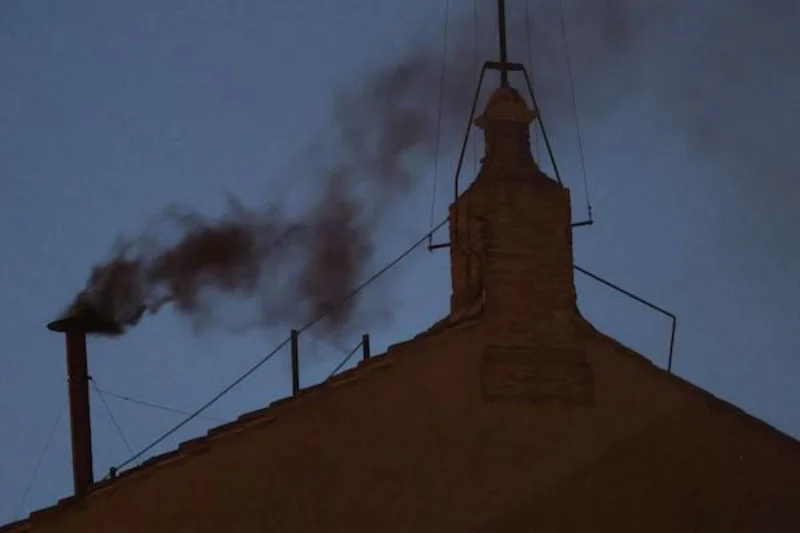
The first conclave votes were concluded without the election of a new pope, as indicated by black smoke rising from the Sistine Chapel's chimney. This traditional signal signifies that the cardinals have not yet reached the required two-thirds majority to elect the 267th pontiff of the Roman Catholic Church.
The conclave, convened to select a successor to the late Pope Francis, includes 133 cardinal electors from 70 countries—a record number reflecting Pope Francis' global outreach during his 12-year papacy. Despite the diverse representation, no clear frontrunner has emerged. Italian Cardinal Pietro Parolin and Filipino Cardinal Luis Antonio Tagle are among the top contenders, with other potential candidates from France, Hungary, the U.S., and Italy also in consideration.
The voting process will continue daily, with up to four ballots per day. A two-thirds majority, or 89 votes, is required to elect a new pope. The cardinals remain isolated with communication blocked to maintain the sanctity and secrecy of the process.
The black smoke was produced by a mixture of potassium perchlorate, anthracene, and sulfur, which are burned in a separate stove alongside the one used to burn the ballots. This method ensures a clear and distinguishable signal to the public.
As the conclave progresses, the world awaits the emergence of white smoke—a sign that a new pope has been elected. Until then, the cardinals continue their deliberations in the Sistine Chapel, under the watchful eyes of thousands gathered in St. Peter’s Square.