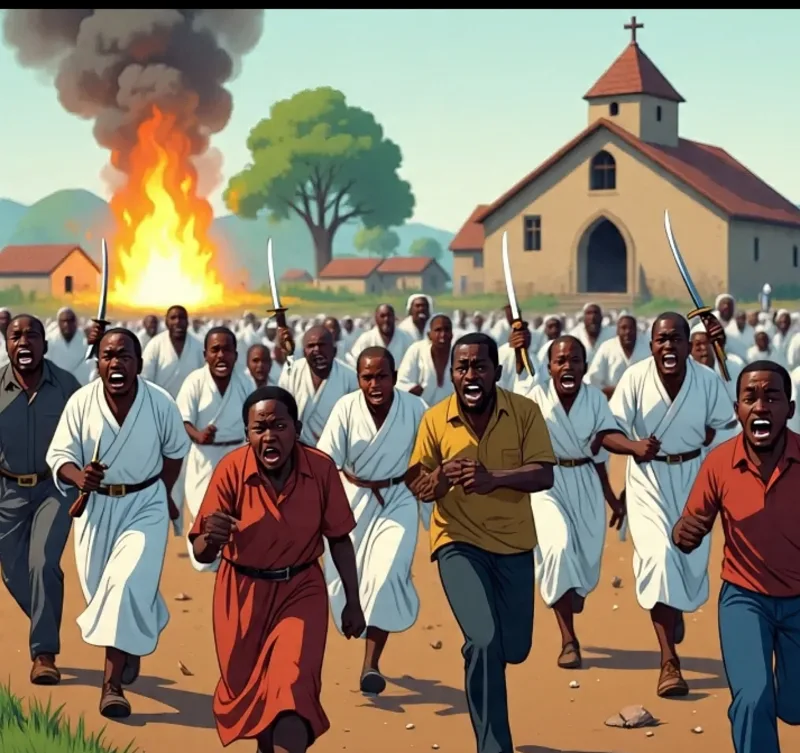
Just two months after a horrific massacre that left over 200 people dead, Yelewata — a farming community mainly made up of Christians in Benue State — has faced yet another assault. In the early hours of August 11, suspected Fulani gunmen targeted local farmers, resulting in three deaths and several serious injuries. The victims have been named as Peter Shinku, Igyo Anya, and Yooga Udegi.
Immediate Fallout and Community Response.
This attack sparked widespread anger in the community. Women from Yelewata took to the Makurdi–Lafia highway, strongly protesting the military's presence, accusing them of being passive during the assault. Armed with branches and chanting slogans, the protesters demanded that the soldiers be replaced with mobile police forces, arguing that the military had failed to offer the protection they needed.
A Grim Reminder of June’s Massacre
This recent act of violence is a painful reminder of the massacre from June 13–14, when gunmen killed between 100 to 200 residents, including many displaced people taking shelter at a Catholic mission. The attackers also set fire to homes and a market, leaving destruction and despair in their wake.
In response to that tragedy, President Bola Tinubu ordered a crackdown on those responsible and visited the Benue capital, Makurdi, calling for quick justice. Still, this new violence highlights that the security problem is yet to be overcome.
Context of a Deepening Crisis
Benue State and the surrounding Middle Belt have been experiencing increasing violence, driven by competition over land, grazing routes, and ethnic-religious tensions. These recurring attacks, often blamed on armed Fulani herders, continue to terrorize communities and threaten national stability.
A recent study examining the economic impact of insecurity revealed that rising violence has led to a significant drop in agricultural productivity, illustrating the broader consequences of these attacks.
What’s Next?
The recent fatalities have intensified both local and national demands for effective security reform. Protesters are calling for mobile police to take over from the military in protecting the community, highlighting failures in deterrence and the ongoing issue of impunity. Meanwhile, residents are left coping with grief and fear as the cycle of violence shows no signs of stopping.
The attack on August 11 in Yelewata marks yet another tragic moment in a painfully familiar pattern of violence. As communities grieve and demand justice, the pressing question still stands: Will authorities manage to break this cycle and restore peace, or will more lives be lost in vain?