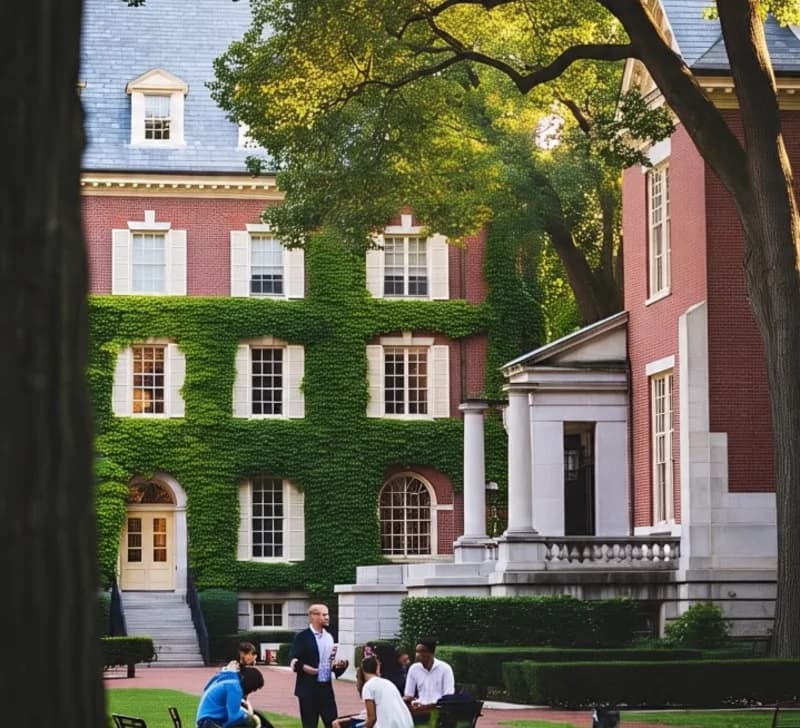
Nearly a week after the Trump administration revoked Harvard University’s authority to enroll new international students, the decision continues to trigger widespread backlash from legal experts, academic leaders, foreign governments, and student advocates. What began as a sudden administrative action has quickly escalated into a constitutional showdown with global implications for U.S. higher education.
A Sudden Move with Sweeping Impact
On May 22, the Department of Homeland Security (DHS) announced it was revoking Harvard's certification under the Student and Exchange Visitor Program (SEVP), citing the university’s alleged failure to comply with federal requests for records on international students and purported ties to foreign governments.
In a statement, DHS Secretary Kristi Noem accused Harvard of “obstructing national security efforts” and claimed that the institution had enabled student groups tied to “violent unrest and anti-American ideologies.” The decision immediately halted the issuance of new student visas and put thousands of existing international students in legal limbo.
Political Overtones and Accusations
President Donald Trump has defended the move in typically combative terms. At a rally in Florida, he referred to Harvard students as “math-challenged radicals” and linked the university to antisemitic rhetoric and pro-Palestinian activism. “Harvard doesn’t educate, it agitates,” Trump said, referencing the university’s recent campus protests over Gaza.
Trump’s criticism also extended to Harvard’s introductory math offerings, mocking a course designed to help students improve their numeracy skills before advancing in STEM. “If they can’t add 2+2, they shouldn’t be on a student visa,” he said.
Critics say the administration’s real target is academic independence. “This is a politically motivated assault,” said Professor Noah Feldman of Harvard Law School. “It's about punishing a dissenting institution.”
Harvard Fights Back in Court
In response, Harvard filed an emergency lawsuit in federal court, arguing that the ban violates its First Amendment rights and undermines its ability to function as a global research institution. The university’s filing claims the administration is using immigration law as a weapon against perceived ideological enemies.
“International students are essential members of our academic community,” said interim President Alan Garber in a statement. “This action imperils our mission and betrays our nation’s historic role as a beacon for global talent.”
A federal judge in Massachusetts, appointed by former President Obama, issued a temporary restraining order on May 23, halting the implementation of the ban while legal proceedings continue. The judge scheduled a full hearing for next week to determine whether the order will be extended.
Students in Limbo
The ban has left over 7,000 international students at Harvard uncertain about their future. Many fear deportation or visa cancellation. In an op-ed for *The Washington Post*, three international students described the move as “cruel, destabilizing, and deeply personal,” arguing that the administration is using students as “political pawns.”
“This is more than a visa issue—it’s an existential threat to our academic lives,” they wrote.
Students from India, China, and countries across Africa and Latin America are particularly affected. According to university data, nearly one-third of Harvard’s graduate student body is composed of non-U.S. citizens.
International and Institutional Fallout
Governments around the world, including those of China, Germany, and Brazil, have condemned the Trump administration’s action, warning it may lead to a cooling of diplomatic and educational ties. Beijing issued a formal protest, calling the move “a hostile act against academic openness.”
Other U.S. universities, including MIT, Yale, and Stanford, have released joint statements in solidarity with Harvard and vowed to protect their international students.
“This is not just about Harvard,” said Stanford President Richard Saller. “It’s about whether universities remain free to teach and conduct research without political interference.”
A Broader Agenda?
Observers note that this is not the first time the Trump administration has clashed with academic institutions. In his first term, Trump attempted to expel international students taking online-only classes during the COVID-19 pandemic—a move later reversed after lawsuits.
“This fits a pattern of using immigration policy to settle political scores,” said Theresa Cardinal Brown, a former DHS official now at the Bipartisan Policy Center. “It’s deeply damaging to America’s reputation.”
The legal case is likely to reach the appellate courts and potentially the Supreme Court, setting a precedent for how much control the federal government can exert over independent educational institutions.
What Comes Next?
For now, Harvard’s international students can breathe a brief sigh of relief under court protection. But the path forward is uncertain. With the 2025 presidential campaign already underway, the case has become a flashpoint for debates over nationalism, academic freedom, and America’s role in global education.
As one student put it: “This isn’t just about a visa. It’s about who gets to belong—and who gets to learn.”