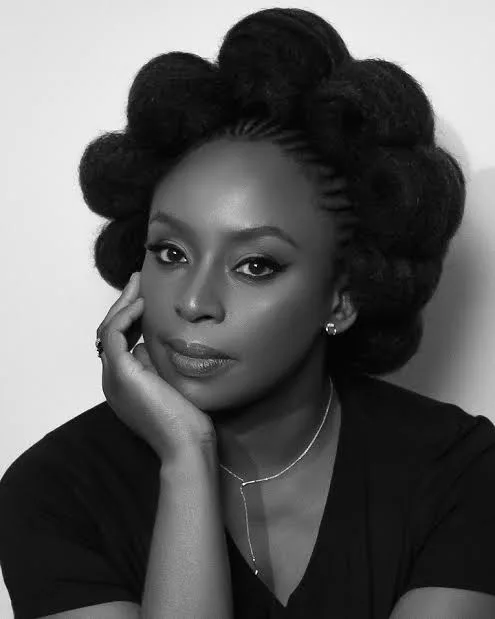
Chimamanda Adichie told The New York Times that she does not want to go back to Nigeria. She said her children could be the only reason she would ever consider returning, and that her daughter still thinks of Nigeria as her happy place. This is no casual complaint from a disgruntled expatriate. It comes from a writer who has long described Nigeria as the source of her voice, the place from which she received everything that shaped her career and identity. The answer to the question in the headline is yes, and the reasons go well beyond one famous departure.
Her son Nkanu, one of her twin boys, was 21 months old when he died in January. Complications arose during a medical procedure at Euracare Multi-Specialist Hospital in Lagos. The family alleges medical negligence, while the hospital denies wrongdoing. Those allegations are still before a coroner, and fairness requires saying so. But the wider argument doesn't depend on how the inquest ends. It depends on what her words reveal about a country that has now failed this family more than once.
Adichie's estrangement did not begin in January. On 2 May 2015, her father, Professor James Nwoye Adichie, was kidnapped while returning to Abba from Nsukka, and released three days later after a ransom was paid. He was 83, and he was Nigeria's first professor of statistics.
In the essay she wrote afterward, the detail that stayed with readers was the kidnappers' instruction to her father to "ask your daughter the writer" to bring the money. She wrote of her guilt: "He was targeted because of me." That sentence explains something about Nigeria. Here, visibility is treated as evidence of wealth, and wealth is treated as a licence for predators. Success, for a Nigerian, can turn into a liability for the people who love her.
The kidnapping was a crime, but the state's conduct afterward was a second injury. She described security services that treated the case appallingly, pressed her for significant sums of money, and demanded authorisation from Abuja before they would act. The experience showed her what lay beneath official assurances about security.
Now set that beside 2026. In both cases, a family with resources, a global platform and the ear of powerful people met an institutional response that was slow, defensive or absent. President Tinubu issued a condolence message and praised her as a literary icon. Governor Sanwo-Olu ordered a regulatory investigation. These gestures deserve acknowledgment. Yet the coroner's inquest has become its own fight, with delays and accusations from the hospital that the couple destroyed evidence by cremating their son's body. A grieving family has been made to litigate its own grief.
If this is the experience of the family of Nigeria's most famous writer, what awaits the family with no famous name, no lawyer, and no international audience?
It also matters what Adichie and her husband are not doing. They have not sued the hospital, and they have called for a better healthcare system for Nigeria. Her husband said the aim is that someone else will not have to go through this. This is grief asking for reform, not revenge. A state that answers such a request with delay and procedural fights confirms the very fears that push people away.
Adichie is not the first to leave in this way. Chinua Achebe declined national honours twice, in 2004 and 2011, and spent his later years in the United States. Wole Soyinka fled the Abacha dictatorship in 1994. Ken Saro-Wiwa did not escape and was executed in 1995. Nigeria has a long habit of driving out or silencing the very people who explain it to the world.
Soyinka's story also contains the hopeful part. He returned when the regime fell. Exile, in Nigerian history, has been a verdict on governments rather than on the land or its people. Adichie's own words leave the door ajar, since she says her children might be the reason she returns. A country that wants her back has a simple task: earn it.
Her departure will dominate headlines, but the more damaging exit is the one no one photographs. The Nigerian Medical Association's president has said the medical council has registered over 130,000 doctors but only about 55,000 are actively practising in Nigeria, and that the doctor-to-population ratio is far below the World Health Organisation's recommended threshold. He also put the number of doctors and nurses who have left since the "japa" wave began at 94,000, and listed poor pay, delayed salaries, inadequate equipment, unsafe working conditions and insecurity among the reasons.
Insecurity appears on that list, and it links the two halves of Adichie's story. SBM Intelligence recorded 7,825 people kidnapped in 1,713 incidents between July 2025 and June 2026, a 66 per cent increase on the previous year. The same failures that took her father for three days are driving doctors out of the hospitals that were meant to save her son. The kidnap crisis and the health crisis are one crisis with two faces.
There is one detail in Nkanu's story that should trouble every Nigerian policymaker. He was referred to Euracare for procedures ahead of a planned medical evacuation to the United States. Even in the worst hour, this family had an escape route. It was a route that the millions of parents in Nigerian hospital corridors will never have.
That is the deeper meaning of an illustrious citizen giving up on her country. Celebrities, professionals and the well-connected can leave, and increasingly do. Those who cannot leave are left with the system as it is, and their only voice is what the famous choose to say on their behalf. When someone like Adichie says she cannot come home, the real question is what remains for those who cannot go anywhere else.
Who follows her?
The honest answer is that many will. Writers, musicians, physicians, engineers, lawyers and entrepreneurs are watching the same events and doing the same arithmetic. Each of them will weigh love of country against the safety of their children. Many will quietly decide, as Adichie has decided in public, that love alone is not enough.
Nigeria cannot argue its way out of this by insisting that patriotism demands staying. Patriotism cannot be one-directional. A citizen owes a country loyalty. A country owes its citizens safety, competent institutions and honest answers when things go wrong.
What a serious response would look like
A serious response would not be a defensive statement or a press campaign about Nigeria's achievements. It would start with the concrete:
- Health: Enforce clinical safety standards in private and public hospitals, make regulatory findings public, and guarantee that inquests move without needless delay.
- Security: Treat kidnapping as the structural crime it has become, prosecute it, and stop leaving victims' families to negotiate alone.
- Retention: Fix pay, equipment and working conditions so that trained professionals have reasons to stay. Even the health ministry has acknowledged that underfunding and infrastructure deficits are worsening the workforce crisis. Acknowledgment is not reform.
- Accountability: Ensure that when the state or a private institution fails a citizen, the process of seeking answers does not become a second punishment.
Conclusion
Adichie has given Nigeria a great deal: stories, a voice abroad, and a mirror the country did not always want to look into. Now she has given it a warning, delivered in the language of a bereaved mother. So, should Nigeria be worried? Yes. It can treat her decision as one woman's private sorrow, or as evidence about what its institutions do to its most visible citizens, and by extension to everyone else.